
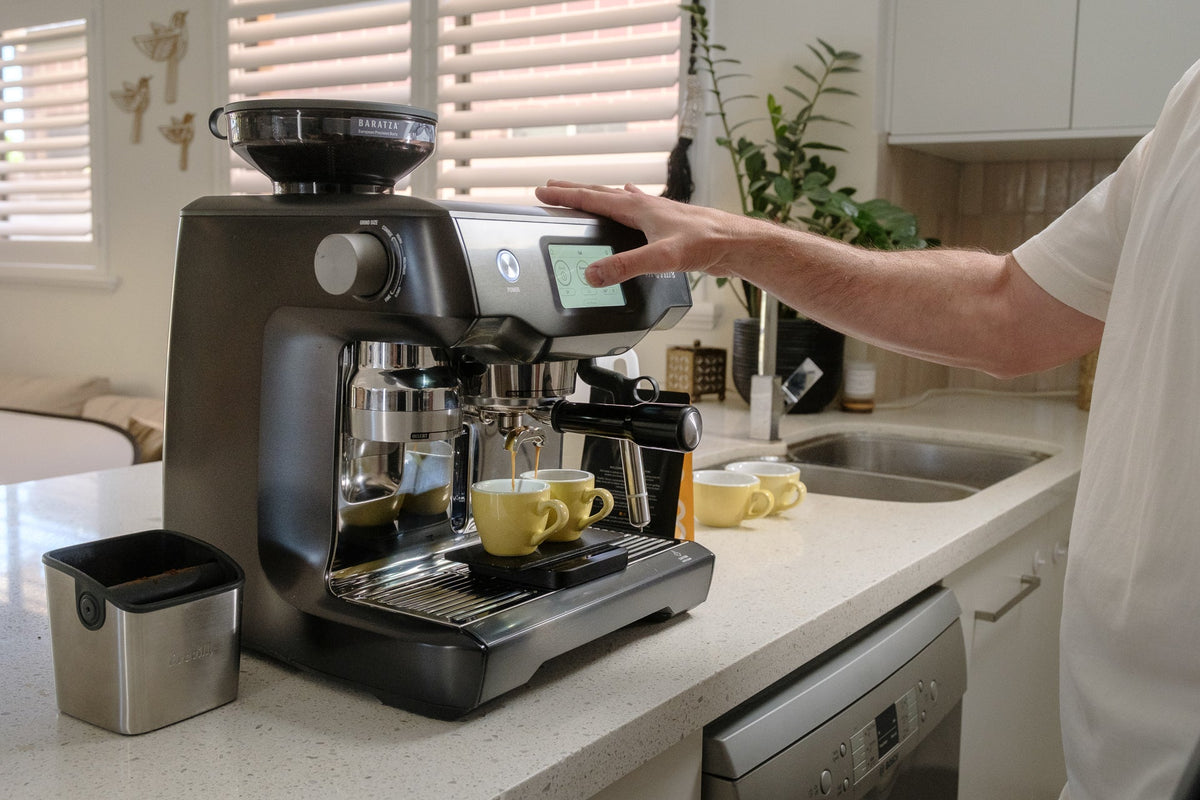
Your coffee tastes bitter at home because it is being over-extracted in some way or another. Either the grind is too fine, your water is too hot or your brewing your coffee for too long. Bitterness means the coffee has extracted past its balanced flavour point.
WHY YOUR HOME-BREWED COFFEE TASTES BITTER
You buy good coffee, follow a recipe, and still end up with a cup that tastes harsh or unpleasant.
Coffee from cafés tastes smooth and balanced, but at home it comes out sharp, dry, or burnt.
Most people assume the beans are the problem or that bitterness is just how coffee tastes. If you make a cake and chuck in roughly a handful of flour, would the end result be what you expected?
WHAT CAUSES BITTER COFFEE FLAVOURS
What over-extraction really means.
Brewing coffee is the process of dissolving flavour compounds from ground coffee into water.
This happens in stages, and not all flavours extract at the same time.
When brewing goes too far, bitter compounds dominate and mask sweetness and balance.
Common causes of over-extraction include:
-
Grind size that is too fine for your brew method
-
Brew time that is too long
-
Water that is too hot
-
Using too much coffee for the amount of water
Bitter coffee is not the same as strong coffee.
Strong coffee refers to concentration, your coffee to water ratio.
Bitter coffee refers to imbalance, poor extraction.
You can brew strong coffee that tastes sweet and smooth, and weak coffee that still tastes bitter if extraction is pushed too far.
How roast level affects bitterness.
Darker roasts naturally lean toward smoky and bitter flavour notes.
If a dark roast is over-extracted at home, bitterness becomes more intense and harder to control.
This is why dark roasts often taste harsher when brewed without careful adjustment.
Common home brewing mistakes.
-
Grinding finer to get more flavour
-
Letting coffee brew longer to make it stronger
-
Using water straight off the boil
-
Thinking bitterness equals quality or higher caffeine
-
Blaming the beans instead of the brewing process
These are very common mistakes and are easy to correct once you understand what’s happening.
HOW TO FIX BITTER COFFEE AT HOME
A simple brew adjustment routine.
Try these small changes one at a time and taste the difference:
-
Grind slightly coarser than you currently do
-
Shorten your brew time by 10 to 20 seconds
-
Let boiling water cool for 30 to 60 seconds before brewing
-
Use a consistent coffee-to-water ratio
-
Change only one variable at a time
Small adjustments can dramatically improve balance and sweetness.
HOW QUALITY ROASTING HELPS
Quality-focused coffee roasters think about how a coffee extracts, not just how it tastes on the cupping table. Little Owl Coffee Roasters focus on balance and sweetness in their roasting approach, which makes their coffees more forgiving and easier to brew well at home. That focus helps reduce bitterness before brewing even begins.
FREQUENTLY ASKED QUESTIONS
Is bitter coffee always bad?
Not always, but strong bitterness usually means the coffee is over-extracted and out of balance.
Does dark roast coffee taste more bitter than light roast?
Dark roasts naturally have more bitter flavour notes, and brewing mistakes tend to exaggerate them.
How long should coffee brew to avoid bitterness?
Brew time depends on the method, but shortening your brew slightly is often the fastest way to reduce bitterness.
Can bad grind size cause bitter coffee?
Yes. A grind that is too fine is one of the most common causes of bitter coffee at home.
CLOSING SUMMARY
Bitter coffee at home is almost always caused by over-extraction, not bad beans or bad taste.
Once you understand what causes bitterness, fixing it becomes straightforward and repeatable.
With a few simple brewing adjustments, your coffee can taste smoother, sweeter, and far more enjoyable.